Smoky Mountains Fall Colors: When Peak Hits and Where to Go
Peak fall color in the Smoky Mountains runs across a 4–6 week window from late September through early November, with the most concentrated color arriving at mid-elevation (3,000–5,000 ft) during the second week of October. The color doesn't happen all at once — it cascades down the ridges from summit to foothill over several weeks, which means there's no single best weekend: the right timing depends entirely on which elevation you're driving.
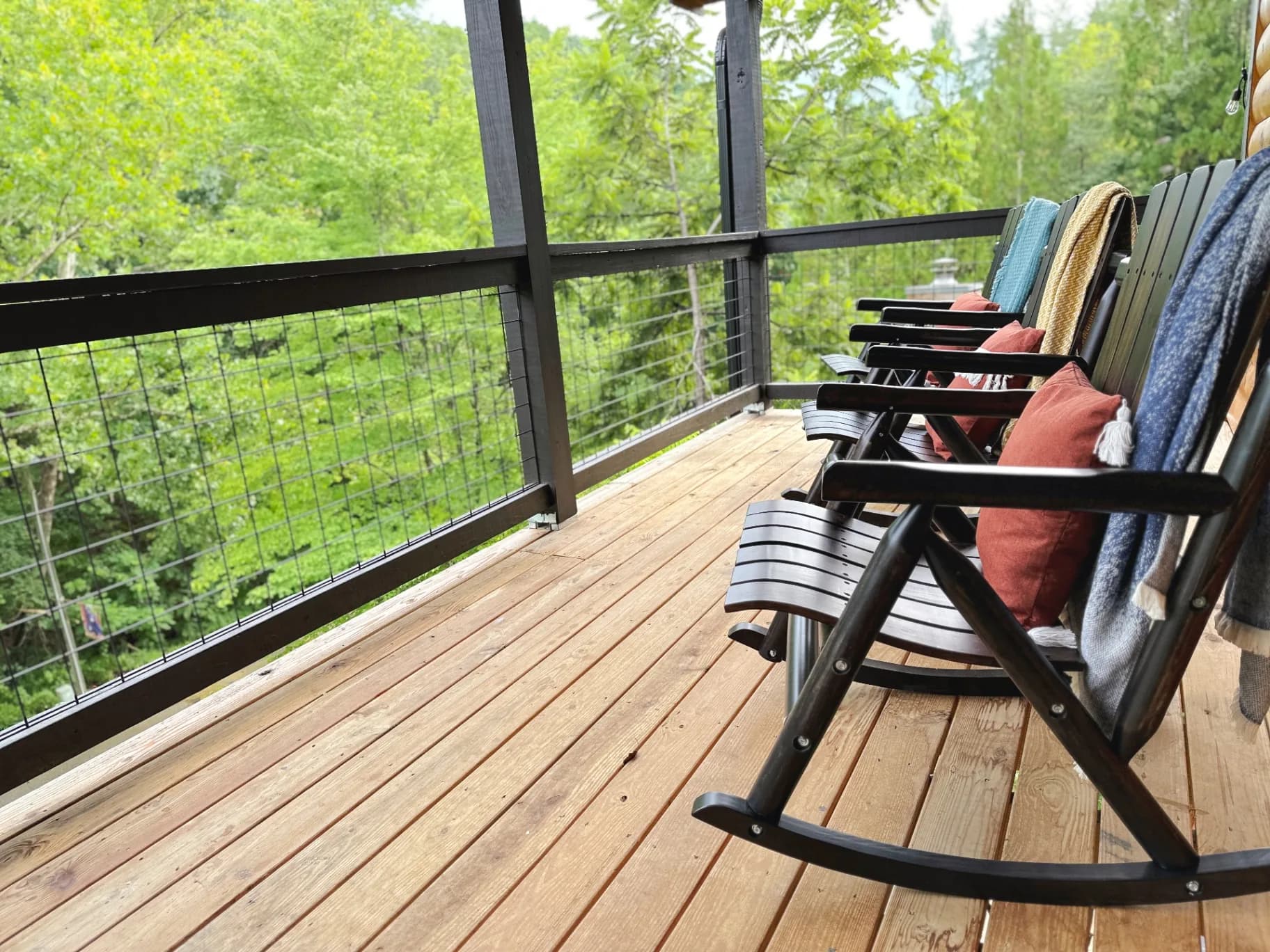
From Whispering Pines Lodge in Sevierville, the surrounding foothills (1,500–2,500 ft) turn in mid-to-late October. That's the color you see from the porch. The high-elevation show inside the park starts 3–4 weeks earlier and requires a drive up Newfound Gap Road.
For the full seasonal breakdown across the year, the Smoky Mountains trip planning guide covers each month from spring through winter.
When do Smoky Mountains fall colors peak?
The color sequence follows elevation:
Summit and sub-alpine (5,000–6,000 ft) — late September to early October. Kuwohi (Clingmans Dome at 6,643 ft), the Boulevard Trail, and the high balds are the first to turn. Color at this elevation is subtler — ferns, blueberry heath, scattered hardwoods — but the views are open and the early October light is clear. The NPS GRSM autumn page publishes weekly fall foliage conditions starting in September and is the most reliable tracker.
Mid-elevation hardwood zone (3,000–5,000 ft) — Columbus Day weekend, typically the second week of October. This is the classic Smoky Mountain fall color zone: beech, yellow birch, sugar maple, sourwood. Newfound Gap Road's mid-section, the Alum Cave Trail, and the Chimney Tops Overlook all sit in this band. When people post October ridge photos, this is the color they've captured.
Foothills and valleys (below 3,000 ft) — mid-to-late October. Gatlinburg, Cades Cove, and the Sevierville cabin neighborhoods turn 2–3 weeks after the summit. The color wraps around the cabin and the valley roads without requiring any park entry or drive time.
What elevation does the color change start at?
Color change begins at the highest elevations and works downward. The spruce-fir forest at the summit elevations stays evergreen year-round, but the hardwood zones just below it (around 5,000 ft) develop reds and oranges in late September.
The saturated reds and oranges in fall photography are concentrated in the 2,500–5,000 ft band. This zone is accessible via Newfound Gap Road without hiking — pull-offs like Morton Overlook (4,855 ft) and the Chimney Tops Overlook are directly in this band. You can drive through the color window and stop at pull-offs on a single morning.
The best overlooks and fall color drives
Newfound Gap Road (US-441). The main connector between Gatlinburg and Cherokee, NC climbs from valley floor to 5,046 ft at Newfound Gap over 16 miles. The mid-section — roughly Chimney Tops Overlook north to the gap — is the densest hardwood canopy accessible by car. Drive it in the morning (Gatlinburg toward Cherokee, eastbound) for better light and thinner traffic. The pulloffs fill by mid-morning on Columbus Day weekend.
Foothills Parkway (western section). The western segment runs along a ridgetop above 2,000 ft with continuous panoramic views across the fall canopy below — no commercial development, no traffic signals, and almost no crowds compared to Newfound Gap Road. The color here peaks slightly later than the park interior. Look Rock Tower at the western end of this section adds 360-degree views with minimal hiking.
Cades Cove Loop Road. The 11-mile one-way loop through this pastoral valley is at lower elevation, so color peaks in the last two weeks of October rather than Columbus Day weekend. Wildlife — deer, turkey, bear — are reliably active in fall regardless of the foliage timing, which makes this the best loop when peak park color is still a week away. The NPS Cades Cove page has the current vehicle restriction schedule.
Kuwohi (Clingmans Dome) — renamed from Clingmans Dome in 2024. The 7-mile spur road climbs to a parking lot at 6,311 ft, then a half-mile walk to the observation tower. Summit color peaks in the last week of September, not Columbus Day weekend. Time the visit for late September if you want the sub-alpine color; the October visit is still worthwhile for the panorama of mid-elevation color across the park. The NPS Kuwohi page has road closure dates — the spur closes in winter, typically late November.
What's the traffic actually like during peak fall?
Honest: heavy, predictable, and manageable with early starts.
Columbus Day weekend is the highest-traffic week of the year in the park. The main choke point on a Saturday morning is the Sugarlands Visitor Center–to–Chimney-Tops stretch of US-441. By 9 AM, parking pull-offs fill. By 10 AM, cars queue on the main road waiting for a space to open.
The consistent fix: leave the cabin before 8 AM, arrive at Sugarlands before the day-visitor rush, and start the drive or hike. By 1–2 PM you're back to the cabin ahead of the afternoon wave.
Cades Cove on Wednesdays and Saturdays has a vehicle-free morning window from sunrise to 10 AM — the standing NPS policy for most of the year. A Wednesday in mid-October with a 7 AM start is the Cades Cove experience worth planning a trip around.
How does the color window affect cabin pricing and planning?
Columbus Day weekend is the single highest-demand week in Sevier County — cabin rates peak along with the foliage. Properties with limited availability (like a single private cabin) fill 4–6 months in advance for that specific weekend.
The practical options for fall guests with schedule flexibility:
First full week of October. Sub-alpine color at the summit elevations is at or near peak. Mid-elevation color is building. Crowds are lighter than Columbus Day weekend, and cabin pricing is meaningfully lower. This is the sleeper week for knowledgeable fall visitors.
Third and fourth weeks of October. Foothills color — the color surrounding the cabin in Sevierville — is at peak during this window. Inside the park, Cades Cove, the Gatlinburg-side overlooks, and the lower trails are still showing fall color. This is the quieter version of the fall trip: off-peak cabin pricing, manageable park traffic, and color visible without driving to the high elevations.
If fall color is the primary reason for the trip and the specific peak week isn't locked in, the first week of October and the third week of October are both legitimate alternatives to the Columbus Day crush.
For available dates at Whispering Pines Lodge — 15 minutes from the park entrance via a residential route — the cabin page has the full availability calendar.
FAQ
(Schema-rendered FAQ block follows.)
Fall color in the Smokies is well-documented and well-tracked — the park service publishes weekly updates, trail clubs post condition reports, and the NPS autumn page is updated through November. The strategy isn't finding where the color is; it's showing up at the right elevation at the right week. Summit color: last week of September. Mid-elevation hardwood peak: second week of October. Foothills and cabin country: third and fourth weeks of October.
From the cabin porch at Whispering Pines, the foothills show is the one you get without driving anywhere — morning coffee in mid-October with the ridges turned orange and red on three sides.
Mountain expert and travel writer specializing in Smoky Mountain adventures and luxury cabin experiences.


